
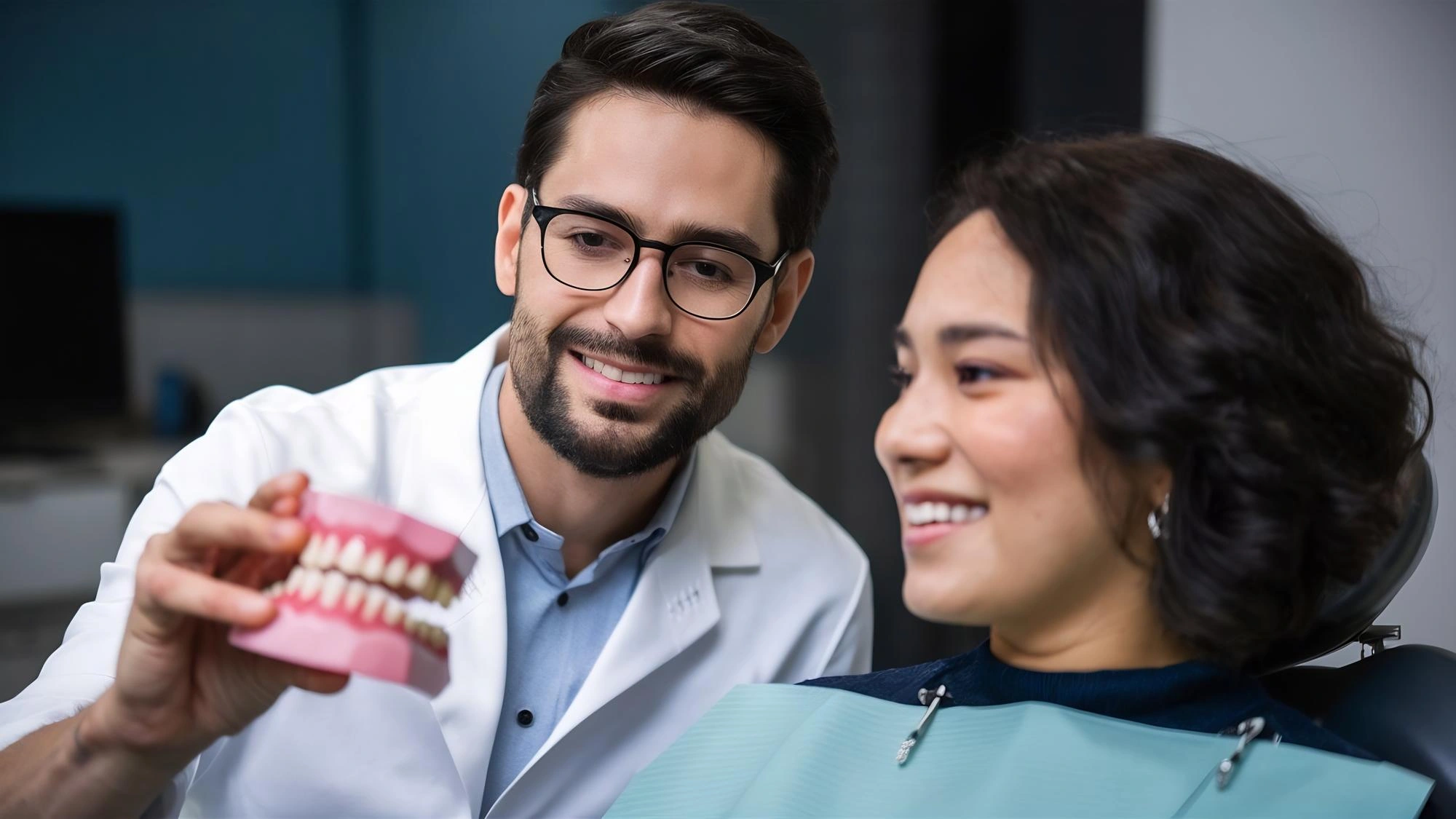
What Is Full Mouth Rehabilitation and Who Needs It?
Teeth rarely wear down all at once.
For many people, changes happen quietly over time. A missing tooth here. Sensitivity there. Difficulty chewing certain foods starts becoming normal. Some avoid one side of the mouth without realizing it. Others notice that older dental work no longer feels comfortable. Gradually, small problems begin affecting how the entire mouth works together.
At some point, the issue stops being about a single tooth.
That is often where conversations around full mouth rehabilitation begin.
The name sounds complicated at first. Sometimes even intimidating.
Still, the idea behind it is far simpler than most people expect.
What Does Full Mouth Rehabilitation Mean?
Full mouth rehabilitation refers to rebuilding or restoring multiple teeth and oral structures so the mouth can function properly again.
It is not one single treatment.
Instead, it usually combines different dental procedures based on what a person needs. The goal is not only to improve appearance but also to restore comfort, bite balance, chewing ability, and long-term oral health.
In simple terms, it focuses on helping the mouth work as a complete system again.
Teeth rarely function independently.
The bite, gums, jaw movement, muscles, and surrounding teeth all influence one another. When several areas become affected at the same time, fixing one problem alone may not fully solve things.
That broader approach is where rehabilitation becomes important.
Why Would Someone Need It?
People usually do not wake up one day suddenly needing full mouth rehabilitation.
More often, years of wear, damage, or dental issues slowly build up.
For some, severe tooth wear becomes the main reason. Grinding habits, acidic foods, or long-term pressure can gradually shorten teeth and change the bite.
Others experience problems after losing several teeth.
When spaces remain untreated, nearby teeth sometimes shift. Biting pressure changes. Jaw discomfort occasionally follows. Over time, even chewing becomes less efficient.
Old dental work can play a role too.
Crowns, fillings, bridges, or restorations that once worked well may eventually stop functioning properly. What begins as minor discomfort can slowly affect surrounding teeth.
Sometimes trauma contributes.
An accident, injury, or fracture may leave behind larger structural problems that affect how the upper and lower teeth meet.
In other situations, advanced gum disease weakens support around the teeth, creating both functional and structural concerns.
Though reasons vary, one pattern stays common:
Several issues usually exist at the same time.
Signs That Suggest Something Bigger May Be Happening
Certain symptoms tend to appear repeatedly.
Some people notice difficulty chewing comfortably. Others experience jaw pain, headaches, or clicking sounds near the jaw joint. Teeth may feel worn, uneven, loose, or sensitive.
At times, biting begins feeling “off,” though people struggle to explain exactly why.
A smile may change too.
Collapsed spacing, broken teeth, shortened enamel, or missing teeth can alter facial support over time.
Still, appearance alone rarely drives the decision.
Function matters just as much.
If everyday activities such as chewing, speaking, or even smiling comfortably begin feeling difficult, a broader evaluation often makes sense.
What Treatments Are Usually Included?
Because full mouth rehabilitation differs from person to person, treatment plans rarely look identical.
One individual may mainly need crowns and bite correction.
Another may require implants, gum treatment, and rebuilding worn teeth.
Procedures often involved include:
-
Dental crowns
-
Bridges
-
Dental implants
-
Veneers in selected situations
-
Gum treatments
-
Root canal treatment if damaged teeth need saving
-
Orthodontic correction when alignment contributes to problems
-
Bite adjustment to improve balance between upper and lower teeth
Sometimes, treatment unfolds gradually across several stages.
The purpose is not to rush.
Instead, dentists usually focus on restoring strength, comfort, and stability in a way that lasts.
It Is About Function, Not Just Appearance
People occasionally assume full mouth rehabilitation is mainly cosmetic.
That is not entirely accurate.
Improved appearance often happens, yes. Still, function usually sits at the center of treatment.
Teeth need to bite together properly. Pressure should distribute evenly while chewing. Jaw movement matters. Long-term stability matters too.
When those elements stop working together, discomfort often follows.
Some people adjust without noticing.
They avoid harder foods. Chew only on one side. Live with recurring sensitivity. Accept headaches or jaw tension as normal.
Yet small compromises sometimes point toward larger dental imbalance underneath.
Rehabilitation often aims to restore what slowly changed over time.
Does Everyone Need Extensive Treatment?
Not necessarily.
The phrase “full mouth rehabilitation” sounds large because it refers to the overall goal, not always the scale of treatment.
For some individuals, changes remain relatively straightforward.
Others may require a more detailed plan.
What matters most is understanding the underlying reason for symptoms rather than assuming everything needs replacing.
Healthy teeth are usually preserved whenever possible.
Treatment focuses on restoring what has weakened - not fixing what already works.
That distinction matters.
How Is Treatment Planned?
Planning often begins with careful evaluation.
Dentists usually examine the teeth, gums, bite pattern, jaw movement, and overall oral health. X-rays, scans, or photographs may help reveal issues not immediately visible.
Sometimes, wear patterns tell an important story.
A cracked tooth may point toward grinding. Missing teeth may explain bite imbalance elsewhere. Jaw discomfort sometimes connects back to pressure building over years.
Instead of addressing symptoms one by one, the bigger picture starts coming together.
That often changes how treatment decisions are made.
Conclusion
Full mouth rehabilitation is not simply about repairing damaged teeth. More often, it involves restoring how the mouth works as a whole - improving comfort, chewing ability, bite balance, and long-term oral health after multiple concerns begin affecting daily life.
For some people, treatment becomes necessary after years of gradual wear. Others seek help following missing teeth, repeated dental problems, or discomfort that no longer feels manageable. At places such as Narayani Dental Clinic, the process often begins by understanding how different problems connect rather than treating them separately. Sometimes, rebuilding comfort starts with recognizing that several small issues may have been pointing toward one larger solution all along.